Dryer Vent Lint and Fire Risk: Signs It's Time to Clean
The warning signs of a clogged dryer vent, and what a thorough cleaning looks like.
October 13, 2026 · 4 min read
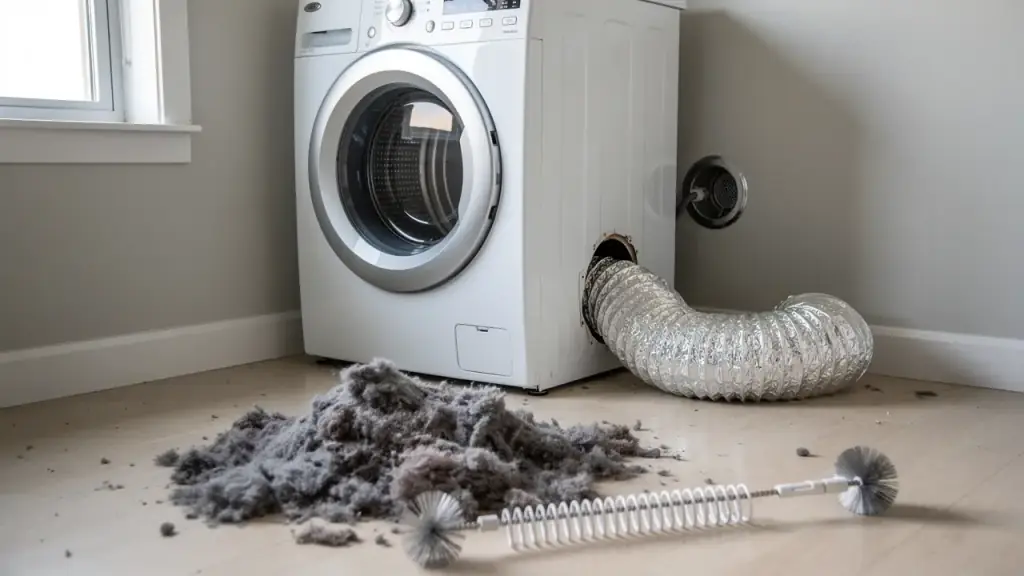
Lint buildup in dryer vents is a leading cause of house fires. That's a sobering sentence, and it's also an easy one to ignore, because the lint trap on your dryer gets cleaned every load and feels like the whole job.
It isn't. The trap catches some of the lint. The rest travels down the vent line and out of the house, and over time some of it settles inside the duct and stays. That's the part you can't see.
Why lint is a problem
A dryer works by heating air, tumbling your clothes through it and pushing the hot, damp air outside through the vent. Lint is dry, light and burns easily. When the vent line is lined with it, two things go wrong. The airflow drops, so the dryer has to run hotter and longer. And the lint sitting in a hot duct becomes fuel. A clean vent keeps air moving. A clogged one traps heat.
Signs your dryer vent needs cleaning
Your dryer will usually tell you something is wrong before anything serious happens. Watch for these:
- Clothes take more than one cycle to dry. This is the most common sign. If a normal load comes out damp, air isn't getting out.
- Clothes or the dryer's top feel unusually hot at the end of a cycle.
- A burning or musty smell in the laundry room while the dryer runs.
- Lint around the dryer, behind it, or collecting on the floor near the wall connection.
- The room gets hot and humid whenever you do laundry.
- The flap on the outside vent doesn't open much, or doesn't open at all, while the dryer is running.
- Visible lint or debris stuck in the outside vent cap.
One sign alone isn't a reason to panic, but two or more means it's time for a look. And if you can't remember the last time the vent was cleaned, that's reason enough.
A quick check you can do yourself
Go outside while the dryer is running and put your hand near the exterior vent cap. You should feel a steady push of warm air and see the flap open. If the air is weak, or the flap barely moves, something is restricting the line. While you're there, look at the cap for lint, nesting material or debris. Colorado winters and spring winds can pack the cap with leaves and dust.
This test isn't a replacement for a proper inspection, but it's a decent early warning.
What a professional cleaning includes
We follow a simple four-part process: disconnect, inspect, clean, test. Here's what that covers:
- A full inspection of the vent line, from the back of the dryer to the outside wall.
- Lint and debris removal along the whole length of the duct, not just the first few feet.
- A check of the vent connection, to make sure the duct is attached properly and isn't crushed or kinked behind the dryer.
- An airflow test before and after, so we can show that the line is moving air the way it should.
- Cleaning of the exterior vent cap, so the air has a clear way out.
The airflow test is the part that makes the difference. A vent can look fine and still be restricted. Measuring before and after shows whether the cleaning worked, and it gives you something concrete instead of our word alone.
How often should it be done?
There's no single schedule that fits every home. A household that does laundry daily, owns pets that shed or has a long vent run to the outside wall will build up lint faster than a couple living in a small apartment. A good habit is to have the vent checked on a regular basis, and sooner if you notice any of the signs above. When in doubt, have someone look at it.
Small habits that help
- Clean the lint trap before or after every load.
- Don't run the dryer when nobody is home or while you're asleep.
- Keep the area around the dryer clear of boxes, laundry and anything else that can burn.
- Make sure the vent duct behind the dryer isn't crushed when you push the machine back against the wall.
- Keep the exterior vent cap clear of snow, leaves and debris.
A fast response when it matters
Mike Salerno left us a review after a dryer vent visit: "They were responsive and came out immediately to clean out my dryer vent. Would recommend." Speed matters when you suspect a problem, and we try to be available when you call.
If your dryer is taking longer than it used to, or you can't remember the last cleaning, call M&J at (970) 207-0510 for a free estimate, or use the contact page. Dryer vent cleaning can also be bundled with carpet or duct cleaning for a multi-service discount.
M&J Carpet and Air Duct Cleaning, (970) 207-0510
Call (970) 207-0510More articles
How Long Does Carpet Take to Dry After a Steam Cleaning?
Drying depends on the weather, the carpet and its condition. Here's what to expect and what you can do about it.
How Often Should You Clean Carpets With Pets and Kids?
A simple schedule for most homes, and when a busy household should shorten it.